Introduction
Machine learning has become central to modern computing, powering applications from image recognition to natural language processing. These tasks often involve training large neural network architectures and running inference at scale.
While performance is critical, energy efficiency is now equally important. High power consumption not only increases operational costs but also impacts sustainability goals. Energy-efficient GPU solutions address this challenge by combining computing power with optimised design for AI workloads.
Graphics Processing Units (GPUs) have long been the backbone of deep learning models. Their ability to perform massive parallel operations makes them ideal for matrix multiplications and other tasks that dominate AI training. However, traditional approaches often prioritised raw speed over energy efficiency. Today, the focus is shifting towards GPUs that deliver high throughput while reducing power draw, making them cost effective for organisations managing large-scale deployments.
Why Energy Efficiency Matters
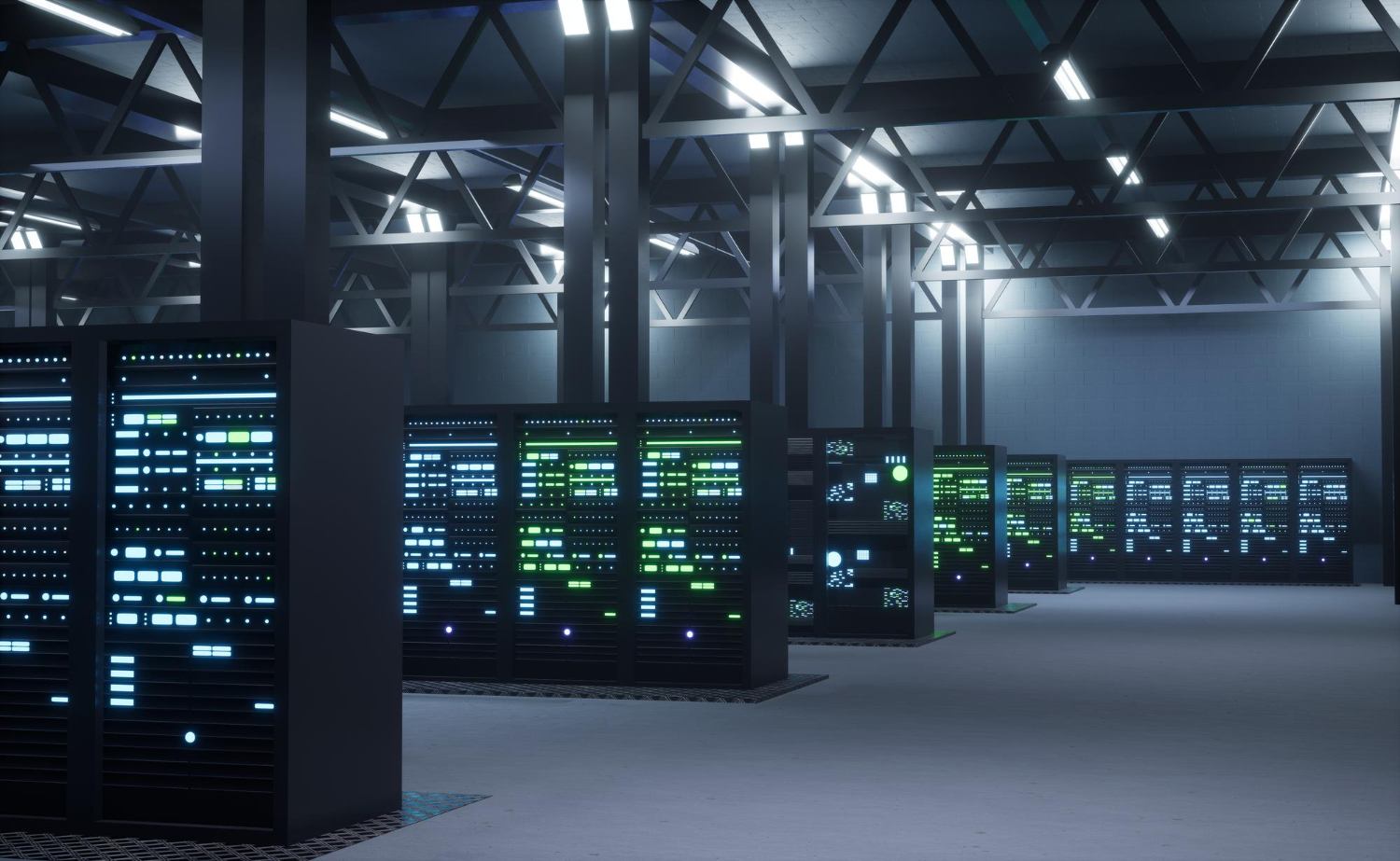
Training and inference for modern AI workloads require significant resources. Large model sizes, complex architectures, and increasing batch size demands push hardware to its limits. This results in high power consumption, which translates into higher electricity bills and cooling requirements. For data centres running multiple GPUs, energy costs can rival hardware expenses.
Energy-efficient GPUs reduce these costs without sacrificing performance. They achieve this through architectural improvements, better memory bandwidth management, and features like mixed precision computing. These optimisations allow deep learning models to train faster while consuming less energy, improving cost efficiency across the board.
Read more: Accelerating Genomic Analysis with GPU Technology
Core Features of Energy-Efficient GPUs
Optimised Tensor Cores
Tensor cores are specialised units within modern GPUs designed for accelerating matrix multiplications, a key operation in neural network training. By using mixed precision, tensor cores can process data faster while reducing energy usage. This approach balances accuracy and efficiency, making it ideal for AI training and inference.
Improved Memory Bandwidth
Memory bandwidth plays a critical role in feeding data to GPU cores. Energy-efficient GPUs optimise memory pathways to reduce bottlenecks, ensuring that computing power is used effectively. This reduces idle cycles and lowers overall power consumption during large-scale training sessions.
Support for Mixed Precision
Mixed precision computing allows models to use lower precision formats for certain calculations without compromising accuracy. This reduces the computational load and power draw, enabling faster training and inference for deep learning models.
Training and Inference at Scale
AI workloads often involve two main phases: training and inference. Training requires processing massive data sets and adjusting millions of parameters, while inference focuses on applying trained models to new data. Both phases benefit from energy-efficient GPUs.
During training, features like mixed precision and optimised tensor cores reduce the time and energy required to process large batch sizes. For inference, energy efficiency ensures that models can run on edge devices or in data centres without excessive power consumption. This is particularly important for applications requiring real-time responses, such as autonomous systems or interactive AI services.
Read more: GPU Computing for Faster Drug Discovery
Multi-GPU and Distributed Training
As model sizes grow, single GPUs may not provide enough computing power. Multi-GPU setups allow workloads to be distributed across multiple devices, improving throughput. Energy-efficient GPUs make these configurations more practical by reducing cumulative power consumption. This is essential for large-scale AI training, where hundreds of GPUs may be deployed simultaneously.
Distributed training frameworks also benefit from energy-efficient designs. Lower power draw per GPU means less strain on cooling systems and reduced infrastructure costs, improving overall cost efficiency.
The Role of NVIDIA A100
The NVIDIA A100 is a leading example of an energy-efficient GPU for machine learning. It combines high computing power with advanced features like tensor cores, mixed precision support, and optimised memory bandwidth. These capabilities make it suitable for training deep learning models with large batch sizes and complex architectures while maintaining energy efficiency.
The A100 also supports multi-GPU configurations, enabling scalable AI training without excessive power consumption. Its design prioritises both performance and sustainability, making it a preferred choice for organisations seeking cost-effective solutions.
Fine-Tuning and Model Optimisation
Fine tuning is a common practice in machine learning, allowing pre-trained models to adapt to specific tasks. Energy-efficient GPUs accelerate this process by reducing the time and energy required for additional training cycles. This is particularly valuable for organisations deploying customised AI solutions across multiple domains.
Optimising batch size and model sizes further enhances efficiency. Larger batch sizes improve throughput, while careful management of model complexity prevents unnecessary energy use. Combining these strategies with energy-efficient hardware ensures that AI workloads remain both fast and sustainable.
Balancing Performance and Cost Efficiency
Energy efficiency does not mean compromising on performance. Modern GPUs achieve both by using advanced architectures and intelligent resource management. Features like mixed precision and tensor cores allow deep learning models to train faster while consuming less energy, improving cost efficiency for organisations.
Cost-effective solutions also extend beyond hardware. Software optimisations, such as dynamic power management and workload scheduling, complement energy-efficient GPUs to maximise savings. Together, these measures reduce operational costs and support sustainability initiatives.

Advanced Implementation Strategies for Energy‑Efficient Machine Learning on GPUs
1) Precision Strategy: Use Mixed Precision by Default
Most AI workloads benefit from mixed precision (such as FP16 or BF16 for tensors with FP32 master weights). This approach reduces power consumption and boosts computing power because tensor cores accelerate matrix multiplications at lower precision while maintaining accuracy. Start with automatic mixed precision in your framework, monitor validation loss, and selectively raise precision for layers that require numerical stability. This method shortens training time for deep learning models and improves cost efficiency during both training and inference.
On NVIDIA A100, BF16 is often preferred for stability. For inference, consider quantisation (INT8) for fully connected and attention layers, while keeping FP16 or BF16 for sensitive paths. This hybrid plan is cost effective and energy efficient without sacrificing accuracy.
Read more: The Role of GPU in Healthcare Applications
2) Batch Size Tuning with Memory Bandwidth in Mind
Dynamic batch size tuning is essential. Increase the batch size until you reach a throughput plateau or encounter memory bottlenecks. Larger batches improve tensor-core utilisation for matrix multiplications, reducing wall time and energy per sample. For smaller model sizes or limited memory, micro-batching can keep the GPU busy and avoid idle cycles.
3) Multi-GPU Scaling for Large Models
When single GPUs cannot handle large model sizes, multi-GPU setups become necessary. Choose the right parallelism strategy:
-
Data parallelism for most neural network training tasks.
-
Model parallelism for very large models, where layers or parameters are split across devices.
-
Pipeline parallelism when memory is tight, staging the model across GPUs and tuning micro-batches to hide communication delays.
On A100 nodes, NVLink improves inter-GPU bandwidth, making scaling more efficient. For mixed workloads or smaller inference services, consider MIG (Multi-Instance GPU) on NVIDIA A100 to partition the device into slices for better cost efficiency.
4) Efficient Data Movement
Feed GPUs with steady, predictable input. Pin host memory, overlap data transfers with compute using asynchronous streams, and prefetch batches to avoid idle time. Keep preprocessing on the GPU whenever possible to reduce stalls and lower wasted power consumption. If preprocessing must occur on CPUs, use well-tuned queues to ensure GPUs never wait for data.
Read more: GPU Coding Program: Simplifying GPU Programming for All
5) Reduce Overhead with CUDA Graphs and Persistent Kernels
Recording steady-state training steps and replaying them with minimal overhead saves energy otherwise lost in kernel launches. Persistent kernels keep threads alive across iterations, improving cache locality and reducing latency. These techniques tighten the inner loop and make throughput more predictable, which is key for multi-GPU scheduling and real-time inference services.
6) Apply Structured Sparsity
Structured sparsity on A100 tensor cores can accelerate matrix multiplications in pruned layers. Pair pruning with fine tuning to recover accuracy. Use block-sparse patterns to maintain regular memory access, as irregular sparsity often wastes memory bandwidth. Distil a dense teacher model into a sparse student, then run training and inference on the student for improved cost efficiency.
7) Power-Aware Scheduling and Dynamic Scaling
Introduce energy-aware job scheduling. Prioritise long training runs during off-peak hours and batch short inference bursts on MIG slices. Apply device-level power caps during low-priority runs and raise them only for latency-critical tasks. Dynamic voltage and frequency scaling (DVFS) can further reduce energy use for background AI workloads while maintaining service-level agreements.
Track metrics such as “joules per trained sample” and “joules per inference” as first-class indicators. These provide better insight into cost efficiency than raw throughput alone.
8) Memory Discipline and Locality
Energy efficiency improves when data movement is minimised. Fuse small operations, keep activations in registers or shared memory, and plan layouts to maximise memory bandwidth usage. Use mixed-precision optimiser states to reduce memory footprint. For attention-heavy deep learning models, select kernels that avoid quadratic buffers or adopt flash attention variants that process data in tiles.
Read more: Enhance Your Applications with Promising GPU APIs
9) Right-Size Models and Training Recipes
Not every task requires the largest model sizes. Run ablations to identify the smallest viable architecture. Adopt parameter-efficient fine tuning methods (such as adapters) when customising at scale. These approaches update only a fraction of weights, reducing compute and power consumption. For deployment, calibrate INT8 on representative data and use BF16 selectively for critical layers to balance accuracy and efficiency.
10) Practical Guidance for Different Environments
-
Edge devices: Use compact backbones and INT8 quantisation for low latency.
-
Workstations: A single A100 can handle both AI training pilots and fast inference when tuned; MIG can provide isolation for multiple tasks.
-
Clusters: Keep jobs on homogeneous nodes for predictable scaling and cost efficiency. Prefer NVLink topologies for heavy all-reduce operations.
11) Automate Monitoring and Adjustments
Build dashboards that track energy, throughput, and accuracy per job. Automate responses: reduce batch size when memory errors spike, switch to BF16 when FP16 underflows occur, and expand to multiple GPUs only when single-GPU utilisation remains high for sustained periods. These controls help maintain an energy-efficient fleet over time.
Challenges and Considerations
While energy-efficient GPUs offer clear benefits, implementing them requires careful planning. Organisations must consider factors such as cooling capacity, power delivery, and compatibility with existing infrastructure. Multi-GPU setups also introduce complexity in workload distribution and synchronisation.
Another consideration is the balance between energy efficiency and peak performance. Some workloads may require maximum computing power, which can increase power consumption. In these cases, dynamic scaling and workload prioritisation help maintain efficiency without sacrificing results.
Read more: How to use GPU Programming in Machine Learning?
Considerations for Energy-Efficient GPU Deployment
Adaptive Workload Scheduling
Energy efficiency improves when workloads are scheduled intelligently. Implement adaptive schedulers that prioritise jobs based on urgency and resource availability. For example, run large-scale AI training tasks during off-peak hours when cooling systems are less stressed, and reserve high-performance modes for latency-sensitive inference. This approach reduces overall power consumption while maintaining service-level agreements.
Profiling and Continuous Optimisation
Regular profiling is essential to identify bottlenecks in memory bandwidth, compute utilisation, and power draw. Use profiling tools to monitor tensor core activity, batch size efficiency, and GPU occupancy. Adjust configurations dynamically based on these insights. Continuous optimisation ensures that energy-efficient strategies remain effective as model sizes and AI workloads evolve.
Hybrid Precision and Quantisation Strategies
Beyond mixed precision, consider hybrid approaches that combine FP16, BF16, and INT8 quantisation for different layers. For example, attention mechanisms may require higher precision, while feed-forward layers can run at lower precision without accuracy loss. This selective approach reduces computing power requirements and lowers power consumption during both training and inference.
Infrastructure-Level Improvements
Energy efficiency is not limited to GPUs alone. Optimise the surrounding infrastructure, including cooling systems and power delivery. Liquid cooling or advanced airflow designs can significantly reduce energy wasted on thermal management. Pair these improvements with GPU-level optimisations for maximum cost efficiency across the entire data centre.
Model Compression and Deployment Strategies
Model compression techniques such as pruning and knowledge distillation complement energy-efficient hardware. Smaller models require fewer resources, reducing power consumption and improving cost effectiveness. When deploying deep learning models at scale, use containerised environments with resource limits to prevent over-allocation and maintain predictable energy usage.
Monitoring Energy Metrics as KPIs
Introduce energy metrics as key performance indicators alongside accuracy and throughput. Metrics like “energy per epoch” or “joules per inference” provide actionable insights for decision-making. Automating alerts when energy thresholds are exceeded helps maintain compliance with sustainability targets and optimises operational costs.
Read more: Case Study: Performance Modelling of AI Inference on GPUs
Future Trends
The demand for energy-efficient GPUs will continue to grow as AI workloads expand. Future designs will likely focus on improving memory bandwidth, reducing idle cycles, and enhancing tensor core capabilities. Advances in mixed precision computing and adaptive power management will further optimise training and inference processes.
Cloud providers are also investing in energy-efficient GPU clusters, offering scalable solutions for organisations without dedicated infrastructure. These developments will make cost-effective AI training accessible to a broader range of users.
TechnoLynx: Your Partner in Energy-Efficient AI Solutions
At TechnoLynx, we specialise in designing and optimising machine learning workflows that balance performance with energy efficiency. Our expertise in GPU programming, multi-GPU configurations, and model optimisation ensures that your AI workloads run faster and consume less power. Whether you need to train large deep learning models, fine tune existing architectures, or deploy cost-effective solutions at scale, we can help.
Our team combines technical proficiency with industry insight to deliver solutions that meet your goals for speed, sustainability, and cost efficiency.
Contact TechnoLynx today to learn how we can transform your AI infrastructure with energy-efficient GPU technology!